
Small Business Financing Is Broken
The SBA tightened the gate. JPMorgan promised rescue. Neither is helping the businesses that need it most.
April 7, 2026

Share
Remember when the new administration promised to fix the SBA? Kelly Loeffler took over as administrator earlier this year declaring that the previous administration had left the 7(a) loan program "in critical condition," and that she would restore it to the engine it was always supposed to be. For small business owners who have spent years navigating credit score minimums, collateral requirements, and paperwork designed for someone else, that sounded like genuine good news.
Then the new rules arrived.
Effective March 1, 2026, the SBA raised minimum credit score thresholds for small loans. It dropped the collateral-free threshold from $500,000 down to $50,000, meaning loans that previously required no lien on business assets now do. It eliminated the "do what you do" flexibility that had allowed lenders to apply their own underwriting judgment for borrowers who didn't fit the standard mold. And it banned green card holders from owning any share of a business seeking SBA financing, a rule drawing fierce criticism from advocates for immigrant entrepreneurs, who represent a disproportionate share of new business formation in the US.
The promise was less bureaucracy. What small business owners got was a tighter gate.
JPMorgan Rides In
Into this gap rode JPMorgan Chase, announcing its American Dream Initiative on March 31. The headline number was hard to ignore: $80 billion in small business lending over the next 10 years, 1,000 new small business bankers hired, and a goal of growing from 7 million small business clients to 10 million. Jamie Dimon called it an effort to "reignite the American Dream."
It's a compelling story. But read past the headline.
That $80 billion includes lending through CDFIs and federal programs, not just direct loans from JPMorgan's balance sheet. The goal of reaching 10 million clients means adding 3 million customers to a base of businesses that are already bankable enough to be JPMorgan customers today. And in the same quarter JPMorgan made this announcement, the Federal Reserve's senior loan officer survey reported that US banks had tightened lending standards for small businesses.
The businesses JPMorgan is coming for are the ones already close to qualifying. The delivery service owner absorbing $4-a-gallon gas, the farmer paying 25 percent more for fertilizer, the three-year-old restaurant with strong monthly revenue but a thin credit file — those businesses are harder to reach today than they were six months ago.
That gap is not JPMorgan's fault. Big banks serve the customers they can profitably serve. That is what they do. The question is who's supposed to serve everyone else.
Who Actually Gets Turned Away
The Federal Reserve's 2025 Small Business Credit Survey makes the access problem concrete. Among small businesses denied financing or funded for less than they requested, these were the most common reasons:
Federal Reserve Small Business Credit Survey, 2025
Look at what the SBA just made harder: credit score requirements (reason #1) and collateral thresholds (reason #2). The two most common reasons small businesses are turned away are precisely the levers the SBA tightened in March. And only 41 percent of small business applicants received all the financing they sought in 2024, a number that has not recovered to prepandemic levels despite record SBA loan volumes at the top of the market.
Large bank approval rates sit at around 13.5 percent for small business applicants. Small community banks do better at roughly 20 percent. The businesses slipping through every gap are the ones the system was supposedly built to catch.
What Would Actually Help
The businesses being squeezed hardest right now are absorbing costs driven by policy decisions in Washington, not by their own failures. Tariffs, an oil shock, immigration changes — these are externally imposed pressures, not internal mismanagement. That distinction matters, because it points toward a specific kind of response. Here are three concrete ideas worth demanding from both the SBA and the institutions claiming to champion small business.
A policy-caused economic injury program. The SBA already knows how to do this. The Economic Injury Disaster Loan program exists precisely for businesses suffering economic harm from events outside their control: drought, storms, COVID. The mechanism is proven — low-interest loans up to $2 million, with deferred payments. What's missing is the will to extend that logic to policy-caused harm. Tariffs are a government-imposed cost. The Iran war oil shock is a government-involved disruption. An EIDL-style program for policy-caused economic injury would put existing infrastructure to work for the businesses absorbing those costs, without requiring Congress to build anything new.
A fuel cost offset for high-exposure businesses. For truckers, delivery operators, farmers, and food service businesses, fuel is not just an operating cost — it is the operating cost. When diesel jumped 41 percent in five weeks, large carriers absorbed the shock through fuel hedges and working capital reserves. Small operators absorbed it through their margins, or didn't absorb it at all. A tax credit or rebate tied to fuel expenditures above a meaningful share of total revenue would give small operators a tool that large companies already have through their treasury departments.
Cash-flow underwriting as the SBA standard. The SBA's recent decision to drop mandatory credit scoring for smaller 7(a) loans was framed as a move toward flexibility. In practice, most lenders kept using the old scores anyway, because the SBA provided no clear guidance on what to use instead. The answer already exists in the market. Cash-flow underwriting evaluates a business on the consistency of its deposits and revenue history rather than a credit score built on debt history. A three-year-old business with $25,000 in consistent monthly revenue and clean bank statements is a better credit risk than its SBSS score suggests. The SBA should make cash-flow underwriting the explicit standard for loans under $350,000, not a vague option that lenders quietly ignore.
The Businesses Washington Keeps Forgetting
The SBA was created for the entrepreneur who doesn't fit the bank's model. The one who built something real, in a hard market, without the credit history or collateral that institutional lenders require. That is supposed to be the whole point.
The American Dream is alive, but it's slipping out of reach for too many people.
- Jamie Dimon
CEO, JPMorgan Chase
Dimon is right about the problem. But the businesses he's describing aren't the ones JPMorgan's initiative is primarily designed to reach. They're the ones still being turned away by every institution that claims to serve them — including the SBA, which just made turning them away a little easier.
Real progress on small business financing doesn't look like an $80 billion headline or a tighter credit score floor. It looks like a loan program that treats government-caused economic harm the way we treat natural disasters. It looks like underwriting built around how a business actually performs, not how much debt its owner has previously managed. It looks like fuel relief for the operators who have no hedge against a war they didn't choose.
Those ideas aren't complicated. They're just not as easy to announce as an initiative named after the American Dream.
Enjoyed this article?
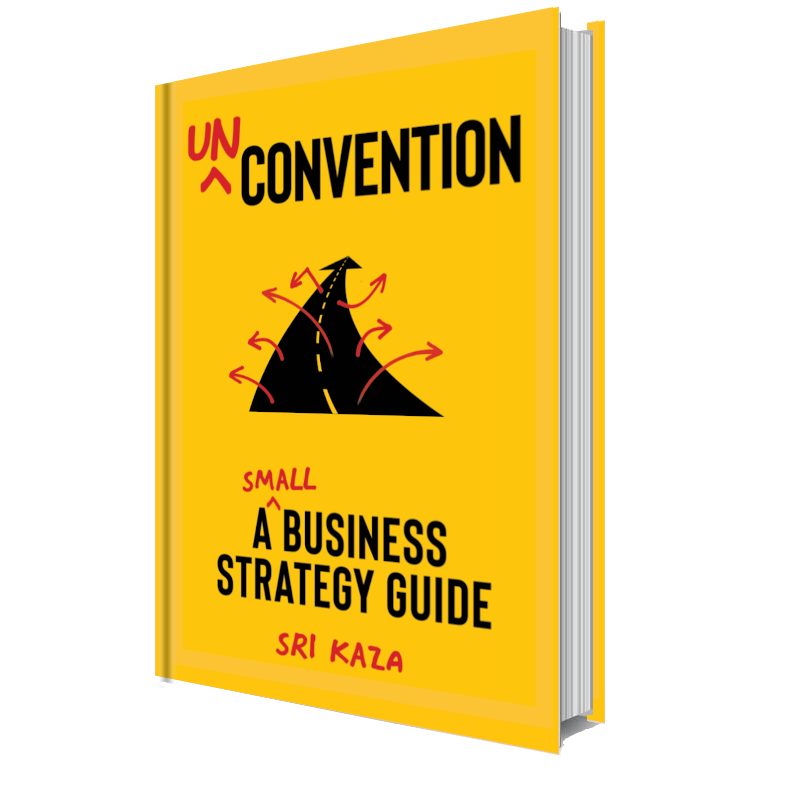
These ideas come from Unconvention — Sri Kaza's guide to competing smart as a small business.
Copyright 2026
Sri Kaza