
One Small Business Beat the President
Victor Schwartz won at the Supreme Court — and your tariff costs are still up
March 7, 2026
Share
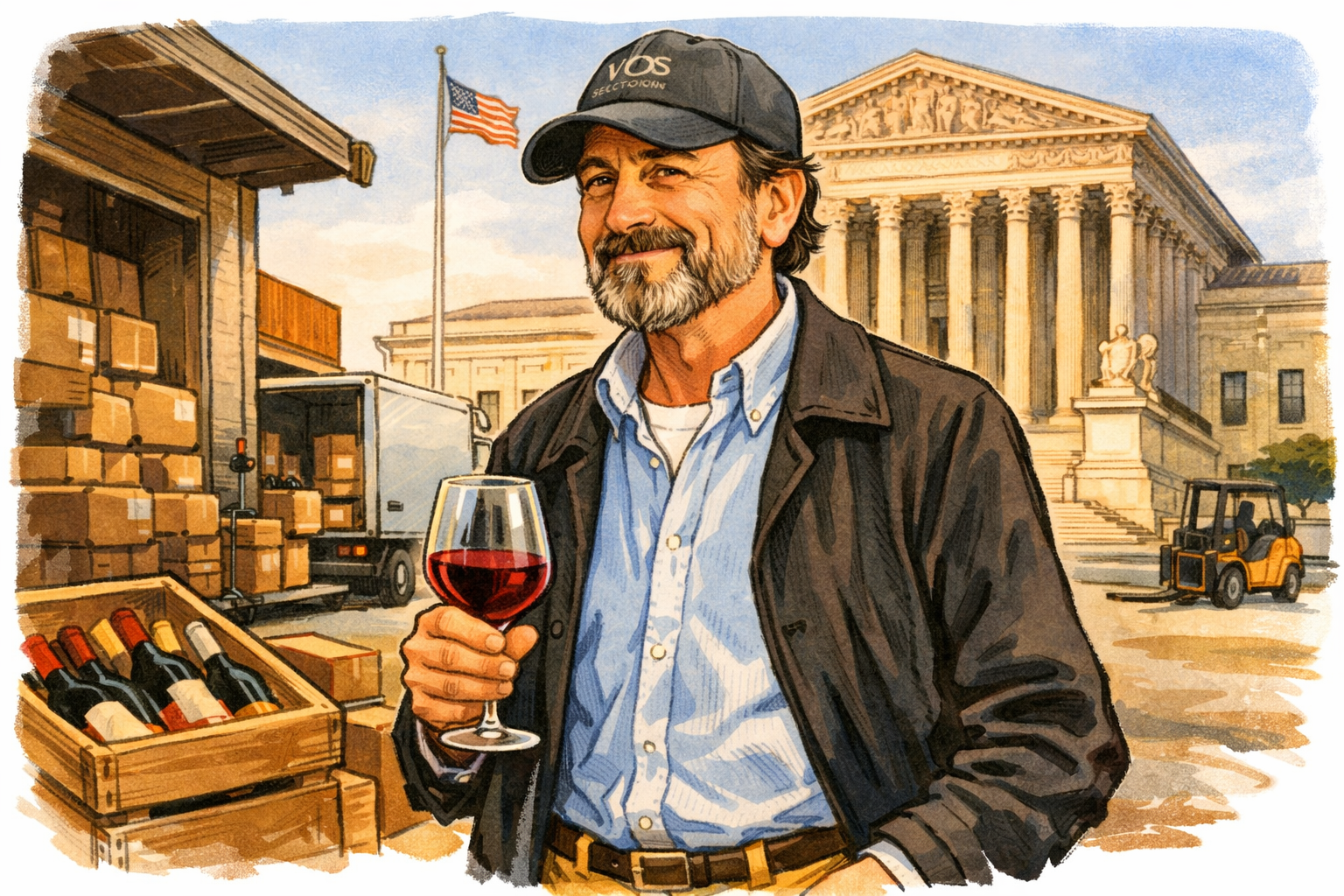
On February 20th, the Supreme Court handed small businesses a rare win. Victor Schwartz, a New York wine importer who had been running VOS Selections for nearly 40 years, had done what most Fortune 500 companies quietly declined to do: he sued the Trump administration over its sweeping tariff policy and took it all the way to the highest court in the land. The 6-3 ruling struck down the IEEPA tariffs as unconstitutional. Small business owners across the country exhaled.
Then, within hours, the administration announced a new round of tariffs under a different legal authority.
Schwartz himself put it plainly: the win matters, and it deserves to be celebrated. But the economic damage from 2025 isn't waiting on legal outcomes. For most small business owners, it's already sitting on the balance sheet.
Here's what the data actually shows, and what you can do about it.
American Businesses Are Paying the Bill
The administration has consistently framed tariffs as a tax on foreign countries. The data tells a different story.
Researchers at the Federal Reserve Bank of New York analyzed import data through November 2025 and found that nearly 90 percent of the tariff burden fell on U.S. firms and consumers, not on foreign exporters. The average effective tariff rate climbed from 2.6 percent at the start of 2025 to 13 percent by year-end. To put that in context, rates had hovered between 2.4 and 2.6 percent for the previous five years. The Yale Budget Lab estimates that retail prices on imported goods rose roughly 7 percentage points relative to their pre-tariff trend before the Supreme Court ruling.
Federal Reserve Bank of New York, Yale Budget Lab, 2025–2026
For a small business importing goods, that math is punishing in ways that have no corporate equivalent. Tariffs have to be paid at the port of entry, while revenue from those goods doesn't arrive for months. Large companies can smooth this with credit facilities and treasury operations. Most small businesses absorb it out of cash flow, credit lines, or margin.
The U.S. Chamber of Commerce estimated that the tariff regime was costing America's roughly 236,000 small businesses about $200 billion annually. A Main Street Alliance survey of 3,000 small business members found that 81.5 percent said they may raise prices to offset tariff costs, 41.7 percent reported delaying business expansion, and 31.5 percent said employee layoffs were likely if rates remained unchanged. In Q2 2025, the U.S. recorded a net loss of businesses for the first time in years, with an estimated 5,000 closures that quarter.
Main Street Alliance Member Survey, June–November 2025 (~3,000 respondents)
Your Customers Are Spending Differently
If you sell physical goods, you've probably felt something shift in customer behavior that's harder to name than just "sales are slower." The data helps explain it.
Bloomberg's Second Measure platform, which tracks billions of U.S. credit and debit card transactions, found that travel, furniture, and clothing all showed year-over-year spending declines through 2025. Restaurants and service-based spending, on the other hand, were growing. BEA data confirms the pattern at a macro level: spending on services climbed $79.9 billion in a single month while goods categories softened.
Bloomberg Second Measure consumer transaction data, 2025 (year-over-year, approximate)
McKinsey's ConsumerWise research adds important texture. About 75 percent of consumers reported trading down in at least one category in 2025. But 39 percent still said they intended to splurge, just increasingly on experiences rather than things. Consumers who are cutting back on appliances and apparel are still spending on meals out, travel, and personal services.
This isn't a temporary blip. When prices on physical goods feel uncertain or inflated, consumers recalibrate what they consider worth buying. Services feel less tariff-tainted. Experiences carry emotional value that's harder to second-guess. Your customers haven't stopped spending, they've moved some of that spending to where it doesn't feel like they're absorbing someone else's supply chain problem.
Three Moves Worth Making Now
Be deliberate about your pricing, and say so out loud. The instinct when costs rise is to absorb as much as possible and say nothing, hoping customers don't notice. That strategy is increasingly untenable, and it has a side effect most businesses don't consider: silence about price changes tends to feel worse to customers than the changes themselves.
If you've raised prices, tell customers why. Not defensively, but honestly. Most of your customers are experiencing the same economic environment. A straightforward conversation, whether in person, in an email, or on a small card at the register, builds trust that a price increase without context does not. Be strategic about where you hold versus where you pass through. Not every product in your mix has the same margin structure or the same price sensitivity.
Think about where services can complement what you sell. Consumer spending is shifting toward services, and that's a real signal about where customer willingness to spend is sitting right now. If you sell products, consider what expertise or experience wraps around what you sell that you've been giving away for free. Services are tariff-exempt, and even modest additions can shift your economics and deepen the customer relationship.
Find out if you're owed a refund. The Supreme Court ruling struck down the IEEPA tariffs as unlawful, which means businesses that paid those tariffs in 2025 may be entitled to refunds, with interest. The Liberty Justice Center, which brought the case, has filed motions to begin the refund process. The timeline is genuinely unclear, but this is money your business paid into an unlawful regime. If you paid IEEPA tariffs, document what you paid and track the process.
Building for What Comes Next
These three moves, honest pricing, adding service layers where you can, and recovering what you may be owed, aren't just responses to tariffs. They're the kinds of adjustments that build a more resilient business regardless of what policy does next.
And the policy uncertainty is real. The replacement tariffs announced under Section 122 are more limited than the IEEPA structure, capped at 15 percent and expiring after 150 days. But the administration has signaled it will continue using every available legal authority to maintain import duties. Rates that are in place today may look different in 90 days. Businesses planning around a specific number are planning around a moving target.
The more durable approach is to plan around what your customers are already doing, because their behavior is adjusting to an environment that isn't going away quickly. They're more cautious about physical goods. They're watching prices and noticing when businesses are straight with them. They're spending on services and experiences in ways they weren't two years ago.
What changes can you make today that would make your business more resilient no matter where tariff rates land tomorrow?
Enjoyed this article?
These ideas come from Unconvention — Sri Kaza's guide to competing smart as a small business.
Copyright 2026
Sri Kaza