
AI Answers the Calls You're Missing
Big companies cut costs with AI. Smart ones serve customers.
September 9, 2026
Share
Two years ago, putting AI in charge of customer calls felt like a bet only a company with 700 employees to spare could afford to make. Today it's just what a well-run business does.
The Wave Nobody's Small Enough to Miss
In late 2025, Salesforce surveyed customer service organizations for its annual State of Service report. The year before, 39 percent said they were using AI agents. In the new survey, that number jumped to 66 percent. That's not steady growth. That's a shift from early adopter to standard practice inside twelve months.
Salesforce, State of Service Report, November 2025
The results back it up. Zendesk's 2026 CX Trends report found that 90 percent of the companies doing this well report a positive return on their AI investment, and 81 percent of consumers now say AI has simply become part of what they expect from customer service.
One Famous Stumble Isn't the Rule
You've probably heard the Klarna story. In 2023, the fintech company said its AI chatbot was doing the work of 700 customer service employees. By 2025, it was quietly hiring humans back after service quality slipped.
That story got attention because it's a good story, not because it's typical. Klarna's own numbers explain the stumble: even after the correction, its AI still handles two thirds of all customer inquiries, response times are still down 82 percent, and repeat issues are still down 25 percent. The mistake wasn't putting AI on the phones. It was optimizing for headcount instead of for the customer, and cutting too far into the human layer that catches what AI can't.
Ninety percent of companies getting real return from this didn't make Klarna's mistake. Most of them never make headlines for it, because "it worked fine" doesn't get written up.
A Small Business Already Doing This Well
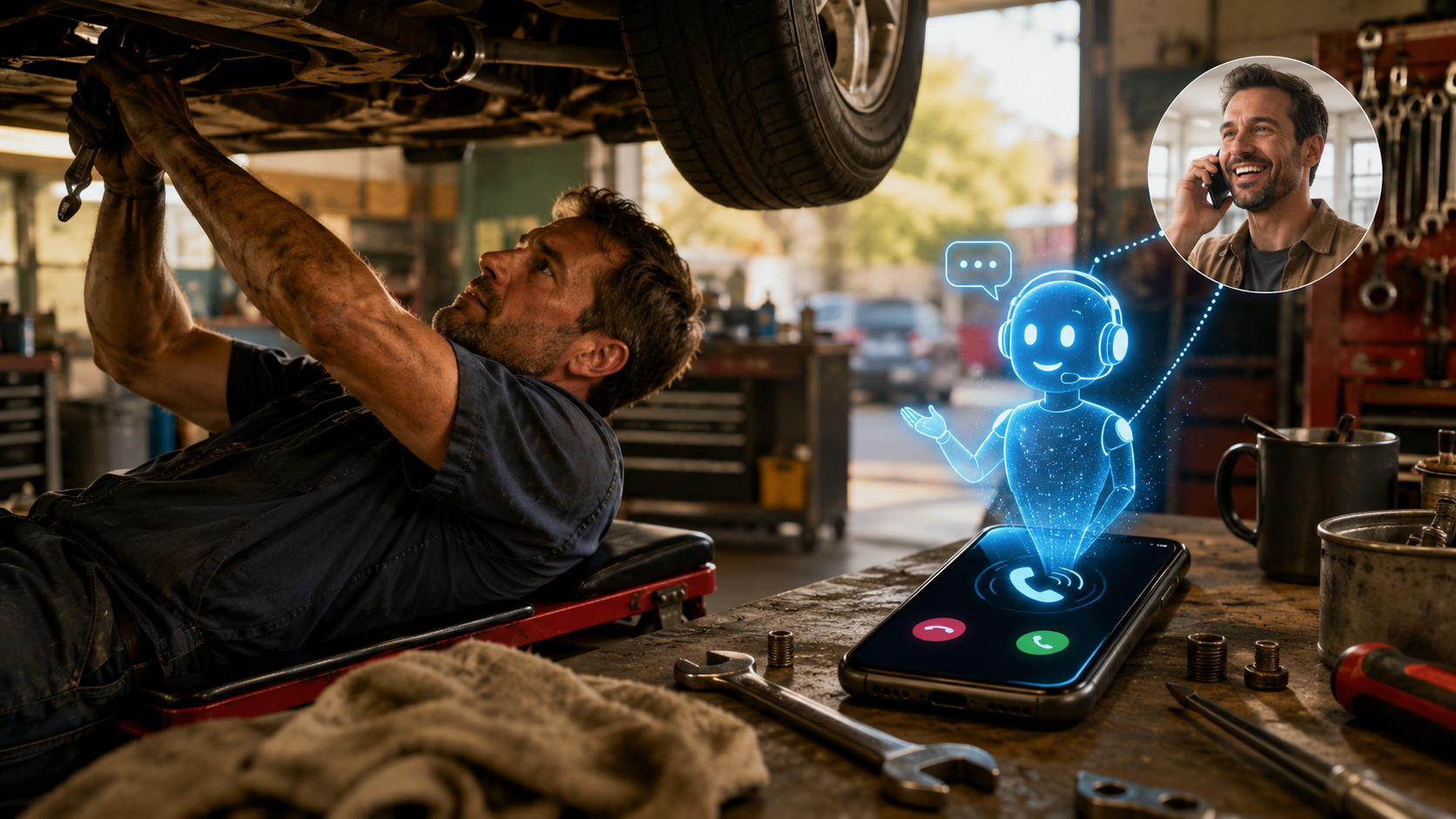
Corey owns C&M Mobile Automotive Repairs. Like most small auto repair operations, the phone doesn't stop when the work starts. Corey uses Rosie AI, a phone answering service built for exactly this problem, and has said it changed how the business runs day to day, specifically calling out the consistency and professionalism it brought to handling calls, and the difference it made in both daily operations and the customer's experience.
That's a vendor testimonial, not an independent review, so take it as one real business's account rather than a verified case study. But it points at something true regardless of the source: a business that used to lose calls to voicemail, or lose a technician's afternoon to the phone, now has every call handled the moment it comes in.
Rosie isn't the only option. AgentZap.ai and My AI Front Desk offer similar services, each built around the same idea: answer the phone properly, every time, without needing a full-time hire to do it.
What This Actually Solves
The businesses using these tools well aren't using them to answer fewer calls. They're using them to answer every call, including the ones they used to lose entirely: the 9pm call from someone whose car won't start, the Saturday call that used to go straight to a full voicemail box, the "is my car ready" call that used to pull a service advisor off the floor for five minutes at a time.
Across small businesses broadly, 62 percent of calls go unanswered, and 85 percent of those callers never call back. That's not a productivity problem. That's customers who wanted to give a business their money and couldn't get through.
Where the Personal Touch Still Has to Show Up
None of this works if the AI becomes the entire experience. The businesses getting real value out of it, Corey's shop included, still have a person who picks up the harder calls, still knows a repeat customer's name, and still makes the judgment calls a script can't. The AI clears the routine traffic so that when a person does pick up the phone, they're not doing it exhausted, distracted, or three calls behind.
What's the Thing You're Not Getting To?
Every small business owner has a version of this, and it's rarely just about phones. It's the client who closed a deal six months ago and never got a real thank you, just an invoice. It's the customer whose project wrapped up fine, but the final report went out looking like every other final report, instead of like something built specifically for them. It's the follow-up note that would have taken ten minutes and meant something to the person who got it, except those ten minutes never showed up on a day that already had thirty other things in it.
None of that happened because the business didn't care. It happened because there weren't enough hours.
What's the version of that on your list right now? The personalized note you keep meaning to send. The extra bit of polish on a proposal that would make it feel less like a template. Would getting that done, even with help from a tool instead of doing it yourself at 9pm, actually make the experience better for the person on the other end? That's the real question, not whether AI is impressive, but whether it closes a gap your customers already feel.
Enjoyed this article?
These ideas come from Unconvention — Sri Kaza's guide to competing smart as a small business.
Copyright 2026
Sri Kaza