
The Oil Shock Didn't End. It Got Worse.
Diesel just set a new record five months in. Here's what changed, and what to do about it.
September 29, 2026
Share
Back in April, I wrote about what the Iran war and the resulting oil shock were doing to small businesses like the ones I work with every week: a meal delivery driver watching his margins evaporate, a South Dakota trucking company absorbing diesel costs it couldn't pass on fast enough, a Pennsylvania farm bracing for a fertilizer bill that would hit long before the next harvest paid it back. At the time, the honest prediction was that the damage would linger six to twelve months after the fighting stopped.
The fighting didn't stop.
Checking the Receipts
I try not to write predictions I'm not willing to revisit. So here's the scorecard, five months later.
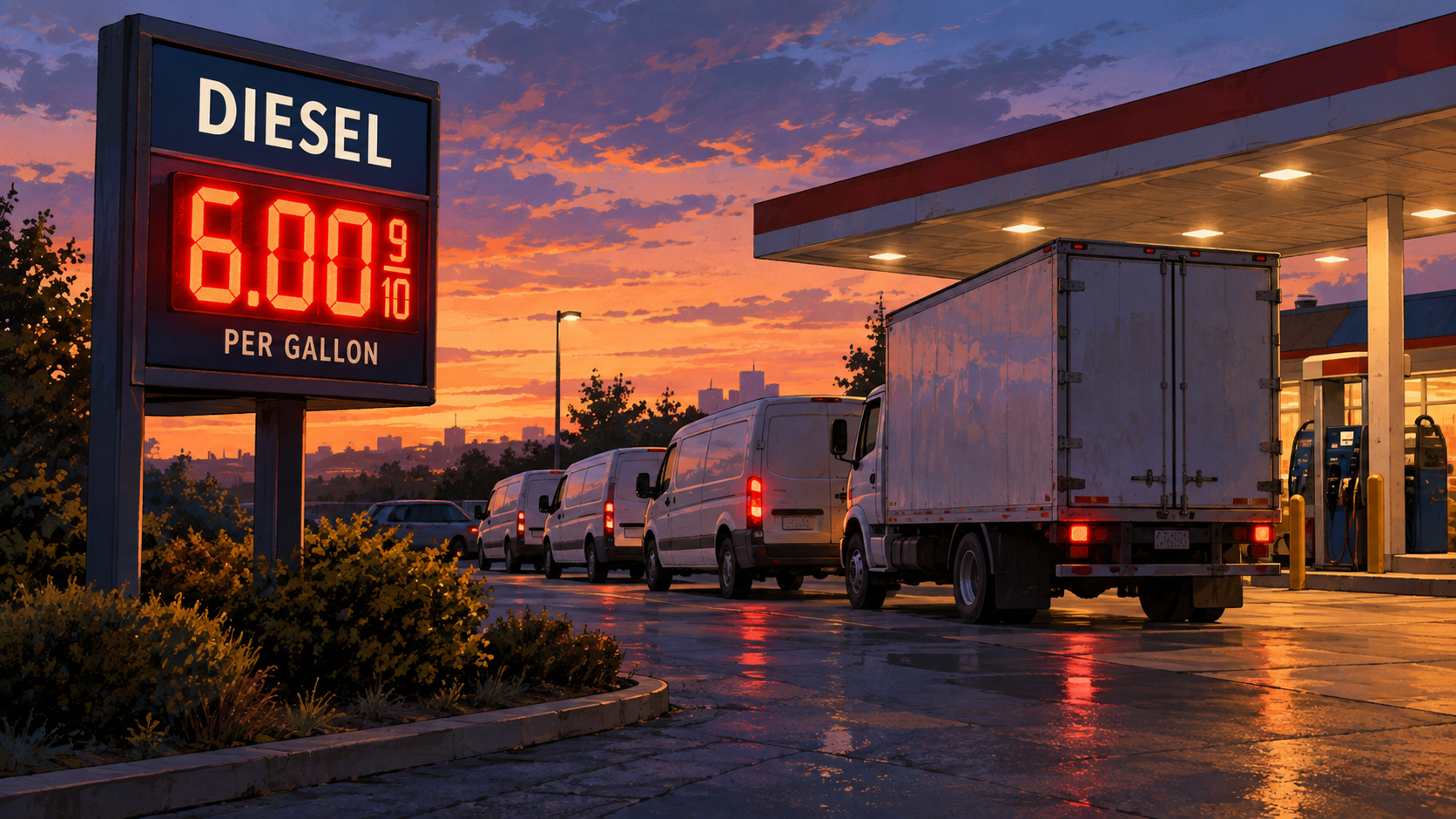
On gas prices: the Department of Energy said in the spring that prices might not fall back below $3 a gallon until 2027. That one held up, and then some. As of this month, diesel hit $5.94 to $5.97 a gallon nationally, a fresh record that's already surpassed the 2022 spike. Oil is back above $100 a barrel. The reason isn't lingering aftershock from February's fighting. It's new fighting. Iran targeted U.S. Navy vessels earlier this month, and the U.S. retaliated. The ceasefire that held through the spring didn't survive the summer.
U.S. Energy Information Administration (EIA), weekly on-highway diesel survey
On food prices: back in April, the worry was a "food shock" arriving in the second half of the year, as fertilizer costs and disrupted shipping worked their way from farms to grocery shelves on a delay. That's also playing out. The USDA has revised its 2026 forecast for food-at-home prices up to 3.1%, nearly double its original projection. JPMorgan now warns global food inflation could reach 5% in the first half of 2027, because agricultural cost pressure lags an oil shock by six to twelve months, and this one is still compounding on top of itself. Tomatoes are already up nearly 13% year over year. Lettuce is up more than 7%.
USDA Economic Research Service (ERS) Food Price Outlook; JPMorgan research note, 2026
On the small business squeeze: Small Business Majority's own Q2 2026 survey of small business owners, fielded in May and June, found a majority reporting rising expenses, falling margins, and slowing customer growth, and that data was collected before this month's new escalation. Whatever that survey captured, it's a floor, not a ceiling, on where things stand today.
I didn't get any of this wrong in April. If anything, April was too optimistic.
What Businesses Are Actually Doing About It
I don't think the useful response to this is another round of "brace yourselves." Owners I work with have already had five months to adjust, and the ones handling it best aren't the ones who guessed right about oil prices. They're the ones who stopped waiting to find out and changed how they operate.
A few patterns worth naming:
Fuel surcharges are becoming standard, not exceptional. Delivery and trucking operations that used to eat fuel cost volatility are increasingly building an explicit, disclosed surcharge into every invoice, tied to a public diesel index rather than a flat guess. It's a harder conversation to have with customers once. It's a much easier one to keep having every month after that.
Route and delivery consolidation. Businesses that used to run flexible, on-demand delivery schedules are batching routes more aggressively, even if it means slightly longer wait times for customers. A trip that used to run half-full now runs closer to capacity. That's a real margin recovery lever that has nothing to do with what oil does next.
Locking in suppliers before the next planting or ordering cycle, not during it. Farms and food-adjacent businesses that got hit hardest by the spring fertilizer spike are the ones now negotiating supplier contracts for next season early, while there's still room to negotiate, instead of waiting until the invoice arrives.
A cash buffer earmarked specifically for energy volatility. Not a general emergency fund. A separate, explicit reserve sized to absorb a fuel or input cost spike without touching payroll or inventory financing. Owners who built this after the spring shock say it's the single thing that made this month's new spike survivable instead of a crisis.
Telling customers the truth. Back in April, one of the small business owners I featured, a meal delivery driver, made a point of explaining his price increase directly to his elderly clients rather than raising prices quietly or eating the cost himself. That's Proximity in action: a real relationship absorbs a hard conversation that a faceless subscription service never could. The businesses handling this second wave best are the ones still having that conversation, not avoiding it.
The Honest Bottom Line
Nobody can tell you when this ends. The Strait of Hormuz situation that started this in February hasn't been resolved, it's escalated. The Fed is watching an economy where inflation pressure argues for caution and slowing growth argues for relief, and that tension isn't going away either.
What I can tell you is that the businesses still standing five months into this aren't the ones who predicted it best. They're the ones who stopped treating it as a temporary event to wait out, and started treating it as the operating environment they're actually running a business in.
Enjoyed this article?
These ideas come from Unconvention — Sri Kaza's guide to competing smart as a small business.
Copyright 2026
Sri Kaza